The call for Clean Air for Blue Skies 2026 is a call for action that delivers cleaner air, healthier lives and shared prosperity. But achieving these goals requires us to look beyond major cities, policy forums and monitoring stations and reach the communities where air pollution is part of everyday life; negatively impacting populations with limited knowledge and awareness on the matter.
Across many communities in Africa, people have limited awareness of how routine activities such as open burning of waste, cooking with wood fuel and leaving school grounds bare and the generated dust can affect air quality and human health. The consequences are particularly concerning for young children, who spend a significant part of their day in learning environments and are especially vulnerable to air pollution risks.
When clean air is still out of reach
A 2025 field visit by a member of Pristine Sustainable Ecosystems (PRISE) to Bar Agulu in St. Paul’s Parish in Siaya County, Kenya, brought this reality into sharp focus.
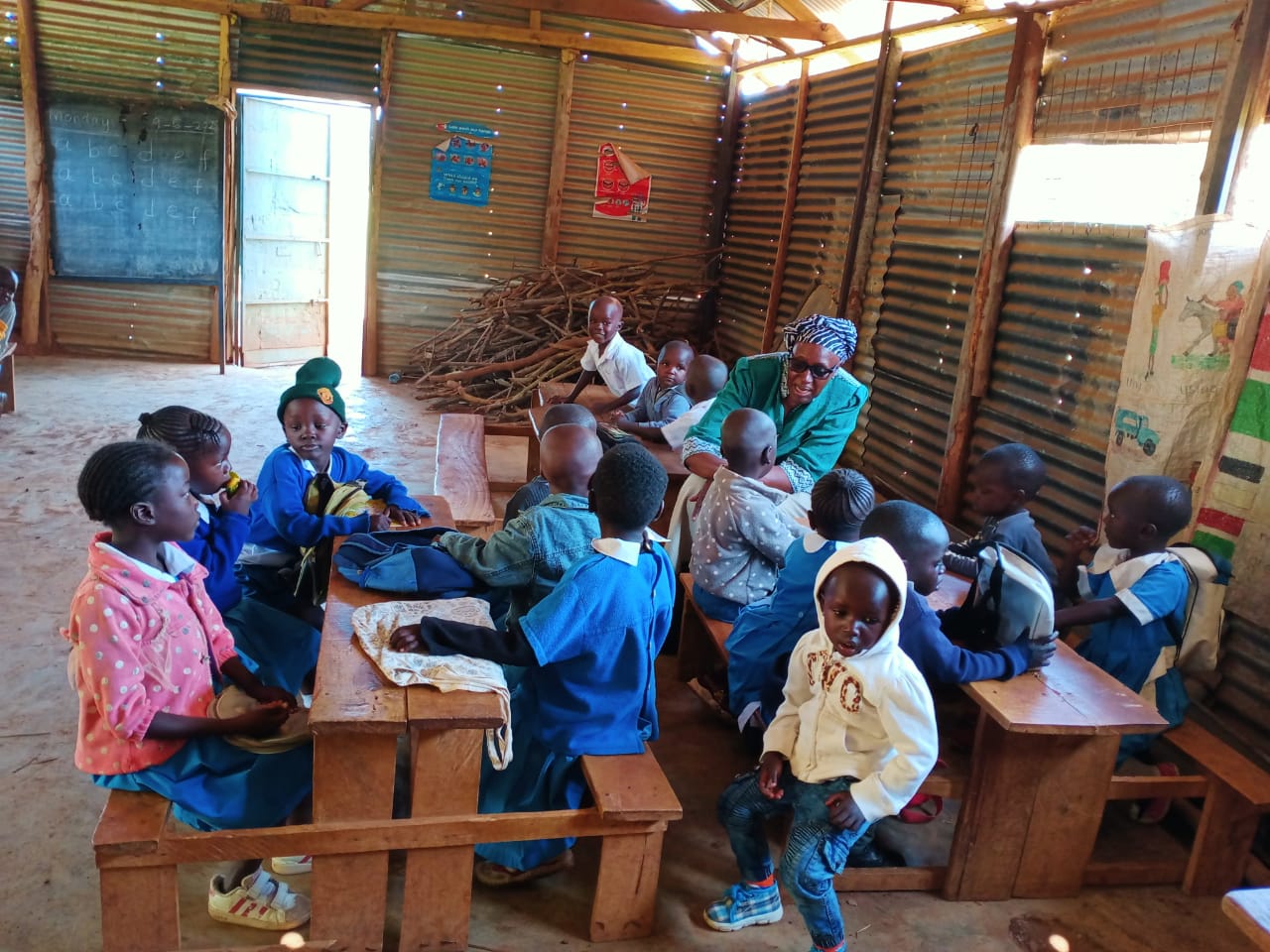
An Early Childhood Development (ECD) centre with young learners in action.
At an Early Childhood Development (ECD) centre learners between three and five years old are served tea and porridge which is prepared using wood fuel on a traditional three-stone fire. Smoke from the fire fills the cooking area and spreads into the school environment, exposing the cook, teachers and children to air pollution.
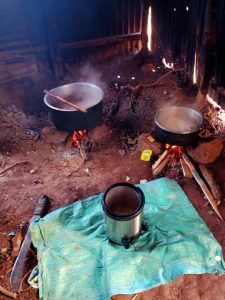
A traditional three-stone fire kitchen commonyly used in many rural homes and establishments.
Some children learn under a mango tree, while the classrooms are housed in a basic tin structure where two classes share the same space, separated by the direction in which the children face. The limited infrastructure presents challenges not only for quality learning but also for creating a healthy and safe environment for young children.
For these children, air pollution is not an abstract environmental issue. It is part of their daily learning environment. And this is precisely why clean-air action must reach the places that are often least visible in national and global conversations.
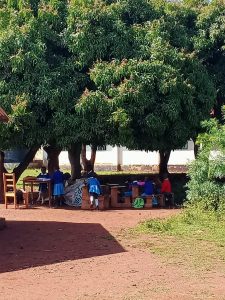
Young learners studying under a tree
Taking clean-air knowledge to the community
PRISE is working with the church community and the ECD centre to explore a practical, community-based response.
The approach is deliberately holistic. It recognises that improving air quality requires more than introducing a new technology. Communities also need knowledge, practical solutions and spaces where better practices can be demonstrated.
The planned interventions include developing simple, age-appropriate messages and learning tools to help young children begin understanding air pollution and how it can be prevented or reduced.
The initiative will also share information with the wider church and school community on the links between air pollution, human health and food production. By making these connections understandable and relevant to people’s everyday experiences, the initiative seeks to encourage practical action at household and community level.
A school that can demonstrate the solution
A further ambition is to work with the church community towards the design of a modern pre-primary school that incorporates cleaner cooking solutions and green building approaches.
Rather than requiring children to bring firewood to school to prepare their tea or porridge, the proposed facility would demonstrate cleaner, less polluting cooking technologies. It could also serve as a practical demonstration centre of how simple green-building innovations can contribute to healthier learning environments.
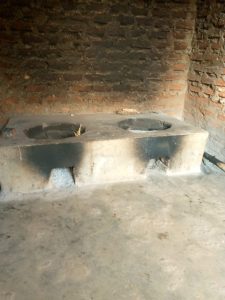
A modern kitchen built with modern technology which would reduce air pollution and save fuel.
The vision goes beyond constructing better classrooms. The proposed centre can become a community learning hub for clean air and climate action, where children, teachers, parents and the wider community can learn about practical ways of reducing air pollution and building climate resilience.
Starting with children, reaching the community
Early childhood centres provide an important entry point for environmental education because they connect children with teachers, parents and communities.
Teaching a child that burning waste creates harmful smoke can begin a conversation at home. Demonstrating cleaner cooking can influence current and future household practices. Showing how vegetation can reduce dust can change how school grounds and community spaces are managed.
In this way, a small intervention in an early learning centre can become a much wider community conversation about clean air.
For us at PRISE, this is what “reaching the unreached” means; taking environmental knowledge and practical solutions beyond institutions and into communities where the impacts of environmental degradation are experienced every day.
Clean air must begin where children learn and grow
The 2026 Clean Air for Blue Skies theme reminds us that cleaner air is ultimately about people. It is about whether children can learn without inhaling harmful smoke, whether families can cook without exposing themselves to dangerous pollution, and whether communities have the knowledge and tools to protect their health and the environment.
The experience at Bar Agulu is a reminder that Africa’s clean-air transition must be inclusive. It cannot focus only on large cities, sophisticated monitoring networks and national policies. It must also reach the small schools, rural communities and informal learning spaces where some of the most vulnerable people live, learn and grow.
Through its partnership with the church community, Pristine Sustainable Ecosystems is seeking to turn one early childhood centre into a practical demonstration of what integrated clean-air and climate action can look like. The ambition is simple but important; healthier places for children to learn, cleaner ways for communities to live, and knowledge that can travel from one generation to the next.
To partner with us, please reach out through info@pristine.africa or write to a.kaudia@pristien.africa.