Written by Alice Akinyi Kaudia
There are environmental events that you attend, participate in and then leave behind. And then there are those that stay with you.
For me, World Environment Day 2026 was one of those occasions.
On 5th June 2026, I participated in the World Environment Day commemoration in Zambia, held in Lusaka National Park. Globally, World Environment Day 2026 focused on climate change and the urgent need for action given the intensifying floods and a warming planet. The United Nations Environment Programme called for action to “step in, go further” and help steer the world towards a safer climate future.
The Zambian message was equally compelling: “Accelerating Zambia’s Climate Action for Green Growth and Sustainability.”
It was a fitting message; and a fitting setting, for a country seeking to connect climate action with green growth, sustainable development and the responsible management of its natural resources.
But what stayed with me most was not the exhibition material. It was the students.
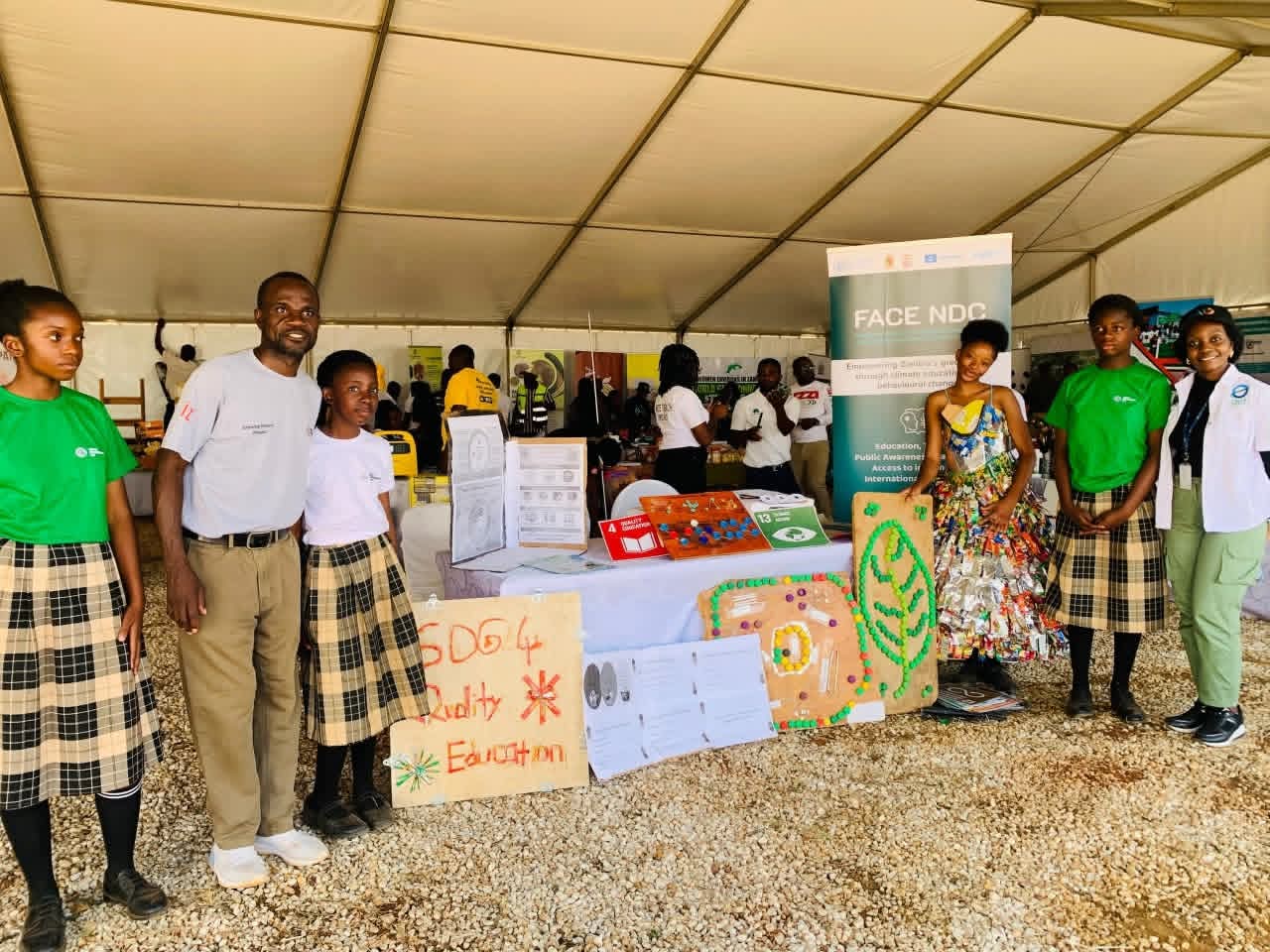
During the event, I interacted with secondary school students who had come to participate in the World Environment Day exhibition. Among them, the students from Arakan Girls Secondary School’s GreenTeenZ Club led by Mr. Mr. Gilson Tembo in coordination with Madam Hope Swatu Chishimba, stood out.
The students did something that immediately caught my attention: they clearly explained the connection between air pollution and climate change.
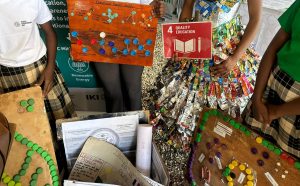
They were not simply repeating definitions. They were connecting the science. They even demonstrated the molecular structures of gases associated with the climate and air-pollution challenge.
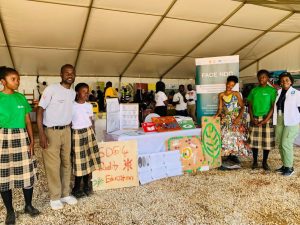
For a moment, I was no longer looking simply at schoolchildren participating in an environmental exhibition. I was looking at young African climate and clean-air communicators.
When young people understand the science, give them a platform
Their presentation reminded me that Africa’s young people should not be viewed only as future beneficiaries of climate action.
They are already knowledge holders, communicators and agents of change.
The challenge is to create more opportunities for them to learn from one another, and to take what they learn beyond the classroom.
Air pollution and climate change belong in the same conversation
The students’ presentation also brought back to my mind the Integrated Assessment of Air Pollution and Climate Change for Sustainable Development in Africa, produced through collaboration among the African Union Commission, the Climate and Clean Air Coalition , Stockholm Environment Institute and the UNEP Regional Office for Africa.
I was deeply involved in the process, first as a coordinating co-Chair and later as a thought leader in the formulation of the Africa Clean Air Program Concept.
The Assessment makes a powerful case for treating air pollution and climate change as interconnected challenges. Many greenhouse gases and air pollutants come from common sources, while action to reduce short-lived climate pollutants such as methane and black carbon can deliver rapid benefits for climate, air quality, agriculture and human health.
The Assessment identifies opportunities for action across transport, residential energy, energy systems, agriculture and waste. It estimates that implementing the recommended measures could prevent around 200,000 premature deaths per year by 2030 and 880,000 per year by 2063, while also delivering major reductions in carbon dioxide, methane and nitrous oxide emissions.
But scientific evidence only becomes transformative when people can understand it, communicate it and translate it into action.
That brings me back to the students.
The question that followed me home
As I listened to the Arakan Girls students, a thought began to take shape:
What if this integrated knowledge of air pollution and climate change could be shared systematically among students across Africa?
What if we started small; with a Zambia–Kenya student knowledge exchange?
The first exchange could bring a small group of Arakan Girls students to Kenya to meet their peers and share what they have learned about air pollution, climate change and sustainable development.
A particularly appropriate learning destination would be the Giraffe Centre in Nairobi, a long-established environmental conservation and education centre.
Why the Giraffe Centre?
The Giraffe Centre offers an especially interesting model because its conservation education programme already uses experiential learning.
Its school programme provides environmental education on sustainable development, forest conservation, wetlands protection and waste management. The Centre reports receiving more than 50,000 children from across Kenya every year. It also conducts teacher training, supports school-based demonstration projects and runs an annual essay competition covering the country.
This makes the Giraffe Centre more than a place to see giraffes.
It could be a platform for peer-to-peer environmental learning, where biodiversity conservation is connected with climate science, air quality, health and green growth.
From Zambia’s classroom to Africa’s classrooms
The proposed exchange would not need to begin as a large or expensive programme.
It could start with two schools, perhaps 10–20 students, a small number of teachers, and a carefully designed programme of peer learning.
An organisation such as Pristine Sustainable Ecosystems, which promotes conservation and climate action, could help nurture the partnership and provide technical support in organising the exchange.
The activities could include:
- Students presenting what they have learned about air pollution and climate change.
- Students demonstrating the science using simple models, diagrams and molecular structures.
- Kenyan and Zambian students comparing local environmental challenges and solutions.
- Visits to conservation and environmental education facilities such as the Giraffe Centre, with opportunities for practical learning.
- Teachers exchanging low-cost approaches for strengthening environmental and climate science education.
- Students jointly developing simple climate and clean-air messages for schools.
- Documenting the pilot and using the experience to build a case for expanding the exchange to other African countries.
The objective would be simple: students learning from students, and schools learning from schools.
Behind every exceptional student is often an exceptional teacher
I was equally encouraged by my conversation with their teacher, Mr. Gilson Tembo.
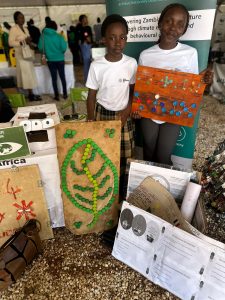
He was visibly excited and proud of his students’ performance at the World Environment Day exhibition. But he also shared another side of their story: the school has very limited resources, and he invests a great deal of his personal time in improving the students’ learning.
His story is a reminder that climate action begins long before a policy reaches a global conference venue.
It begins with teachers who give extra time, schools that nurture curiosity and students who are encouraged to ask difficult questions.
If we want stronger climate and environmental action in Africa, we also need to invest in these people and institutions.
Africa does not lack ideas. We need to connect them.
The Integrated Assessment demonstrates that Africa has an opportunity to pursue development while reducing air pollution, greenhouse gases and short-lived climate pollutants.
But scientific evidence becomes transformative only when it is understood, communicated and translated into action.
The Arakan Girls students showed me that the capacity to communicate this science is already emerging in African classrooms.
Perhaps our task is to connect these young people across borders.
A small idea with a continental ambition
Imagine a Zambia–Kenya Student Climate and Clean Air Exchange.
Imagine students from Zambia standing before Kenyan students and explaining how air pollution and climate change are connected.
Imagine Kenyan students sharing their experiences of biodiversity conservation and environmental education.
Imagine the two groups jointly designing solutions for their schools and communities.
Then imagine extending the network to Uganda, Tanzania, Rwanda, Ghana, Nigeria, Ethiopia and other African countries.
The result would not simply be a student exchange.
It could become an emerging network of young African climate and clean-air ambassadors; budding experts, students learning from students, teachers learning from teachers, and schools becoming living laboratories for climate action.
And perhaps this is what “Join the Movement” should mean
But the image I carry with me most strongly is of students confidently explaining the science of air pollution and climate change to me at Lusaka National Park.
I went to Lusaka National Park to participate in World Environment Day.
I came away with an idea.
Perhaps one of the most powerful ways to accelerate climate action in Africa is to give young Africans opportunities to teach, challenge and inspire one another.
The journey could begin with one school in Zambia and one school in Kenya.
The destination could be much bigger:
An Africa where young people understand that clean air, a stable climate, healthy ecosystems and green growth are not separate agendas; but parts of the same future.